

It’s All Green This Time


A month or two ago, I went for two nature trails. My childhood home is located at the foothills of Vetal Tekdi (hillock) in Pune. Hiking on the hills and going for long nature trails especially over the weekends was a regular part of my younger days. I used to wander around a lot. While climbing up the hill, my father used to tell me to count anthills. I would spot at least 10 of them. Many years passed, I got busy with my life, those random nature trails also stopped being a part of my life. Or rather I thought the hill will always be behind me. I never realised that I would go far away from it. The same thing happened; I moved to Mumbai after my marriage and those trees that I would see from my bedroom windows on the hillock were just part of my distant memory now.

Nature always has some ways of reconnecting back to you. In this age of social media, I got introduced to a fascinating account known as Mumbai Vann. True to its name, the host conducts walk in the various parks of Mumbai. The names of the nature walks intrigued me. Another aspect which attracted me was the walk timings, it began at 9:30 AM. The walk I went for was called “Botany of Literature and Fragrance Walk”. The walk was held at the Veermata Jijabai Bhosale Botanical Udyan and Zoo, Byculla aka Rani Baug in colloquial terms.

That day started with a rather nerve-wracking smell. An odor I was meant to forget long, but it keeps lingering on randomly. After a deep breath, I sat in a white car to welcome new fragrances. Being someone who loves writing, the walks’ title totally encapsulated me. Somehow, I had never viewed trees in that context. Or rather, as the host Abhishek rightly pointed out, we as humans have just stopped appreciating or even acknowledging trees whatsoever. Botany of Literature and Fragrance Walk was all about exploring the flora, fungi and fauna present around us.
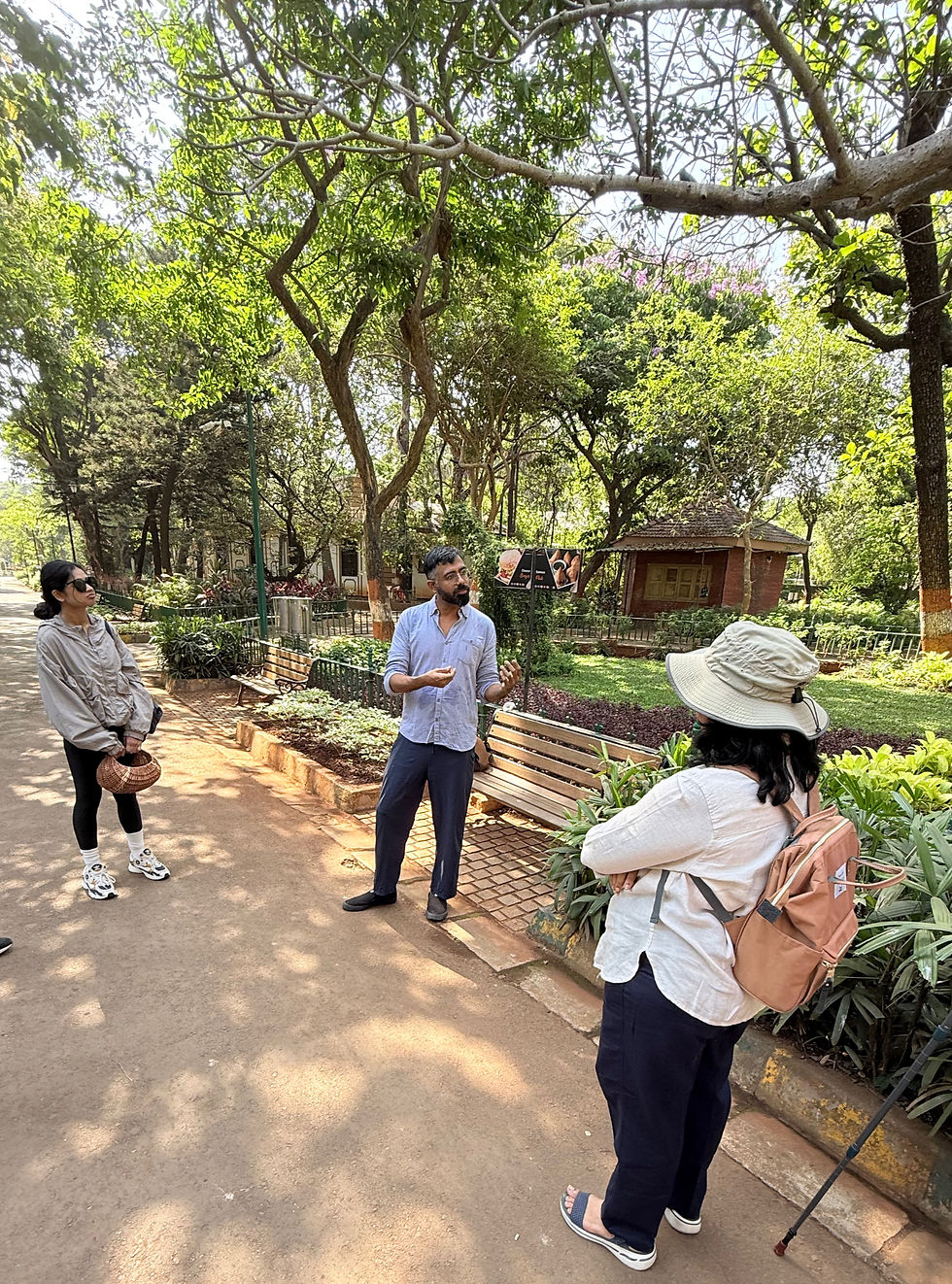
The moment the walk began, I realized I had forgotten an essential item. A napkin or a small cloth to wipe down my ever-dripping sweat from the forehead. I am someone who needs to wear specs everywhere I go and it gets irritating to wipe everything in this sultry Mumbai weather. Though, I thought that the greenery and shade at the Botanical gardens would make the walking more pleasant, but I was so wrong. The sun was just draining us.
Nevertheless, the story of this walk began 13 billon years ago. Or when life began forming in the Indian Peninsular region. Agriculture was invented by humans about 14000 years ago. Mostly before that people used to forage for food in the scarred groves but that too occasionally. If you have ever been to the Rani Baug area, there is an area in between the zoo and the Bhau Daji Lad Museum. The walk begins from there. After the initial conversations about the first life on earth, all of us moved inside the main botanical garden.

Once inside, we gathered below a huge Baobab tree. These trees are a living fossil and are native to Africa and came to the Indian peninsula in the 9th century. From then, the host showed us a variety of trees both native and foreign to the region.
Did you know that the concept of handwriting came through the Tadgola (Ice Apple) leaves? The leaves of these trees, known as Tadpatri were flattened to write on them. Before that people used to write on stone slates and cave walls. It was through the discovery of these leaves that humans could document their writings. The leaves of Teakwood, a tree native to Bombay when rubbed against each other produce a red colour. This became the background for Warli Paintings in the region. Interestingly, Teak also became the reason for choosing Mumbai as a port over Surat during the British era. Another variety of tree used for paper making is Eucalyptus. It was through their leaves that humans started reading in a linear manner as they are wind breakers.

Being April, the garden was full of some rare blooms. A visual treat for sure. I came across trees such as Cannon Ball, whose buds were shaped like soft cotton balls and opened onto a stunning peach colour. In such walks it’s important or I would even say pleasing to just look around everywhere at any given time.

Like once we saw a bunch of rose shaped red flowers just hanging from a branch above us. At another instant, I walked below a tree filled with yellow flowers.
I had learnt in one of my previous walks, that trees which have been lived on by the other living beings of the environment truly belong to that region. Not all trees in this botanical garden are native to the region of Mumbai. They have been specifically imported, or some have even become a part of the local culture. Whether local or global all the plant species are given the same care and love here.

A few days later, I came across a page which conducts slow and sensory based nature trails for toddlers. Without hesitating a bit, I booked the next available exploration with my husband and daughter. This walk was at Maharashtra Nature Park in Dharavi. The walk was being conducted by an organization known as Naturalist Explorers. They conduct various walks in the public parks of Mumbai.

At the beginning of the walk, all of us (parents) were given a nature bingo sheet. The walk began by the kids’ chasing butterflies in an area specially dedicated to them. Slowly, the group started walking towards the interiors of the park. The next pit stop was at a tree known as Fish Poison. The beautiful looking flowers of the tree are poisonous to the sea animals.

While walking towards the next big stop, my daughter just sat down to feel the ground. An awesome way of connecting with nature, is what I feel. Yes, her hands got dirty, but then one needs to get muddy to completely feel it.

Slowly, our group witnessed a huge lotus pond. Though we couldn’t see any lotuses, just big leaves. Right next to the pond, was a shrub with small button like red flowers with pricky thorns. A beautiful sight to see from afar. While walking, we were even collecting leaves, flowers and twigs lying around. We, adults, even spotted a few birds such as kingfishers, water cranes, parakeets to name a few.

Then we were in a for a pleasant surprise. The host showed us natural cotton just scattered around on the ground. My daughter thoroughly enjoyed the experience of finding the cotton buds amongst the dry leaves. The joy on her face was unmatched. While returning to the meeting point, almost all the kids were tired of walking, and their parents were just done with the sweat and humidity of Mumbai.

To experience nature in its purest form is possible when you start interacting with it more often. One must feel the leaves, let the loose soil pass through their fingers, observe the caterpillars crawling on leaves, chase the colorful butterflies, search for curled up leaves, keenly listen to the birds chirping by or even sit on the bark of tree to relax a bit.


Comments